Locations
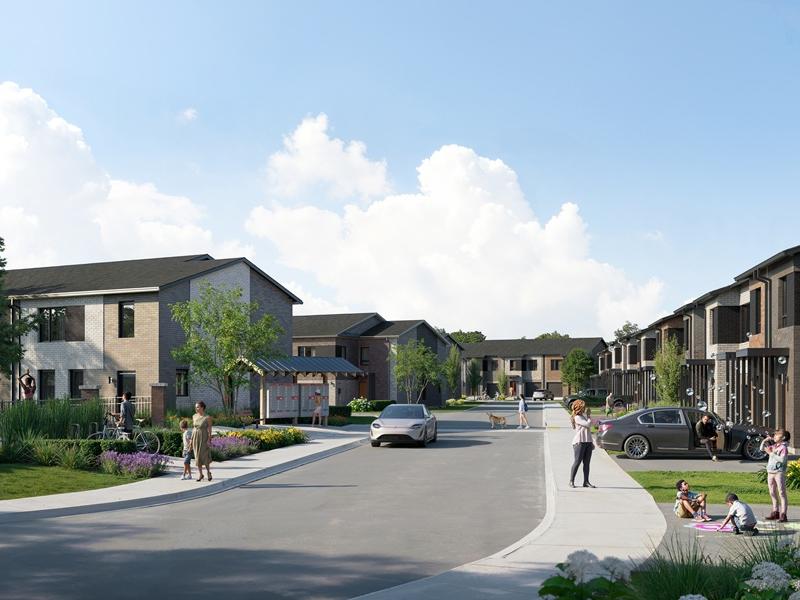

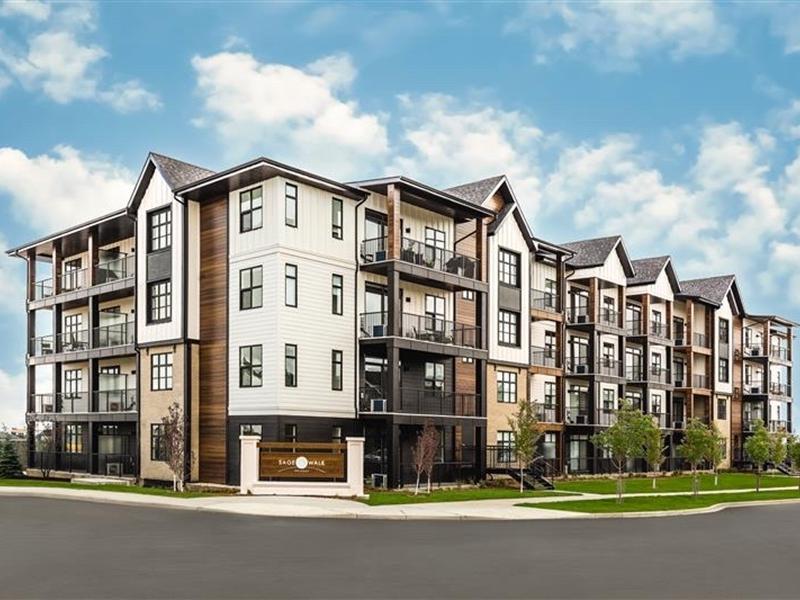




Industrialized home construction is the best way for Canada to achieve the federal government’s goal of building 500,000 homes per year over the next decade, according to participants at a recent MaRS Discovery District event.
Because only a small percentage of Canadian housing originates from off-site methods, there is a great opportunity to ramp up this number, one investment professional observed.
“We need to reimagine the entire supply chain of Canadian industry, from forestry, to valorizing that forestry into mass timber; to advancing manufacturing construction methods and to be reimagining how we actually build buildings faster,” said Matt Stanley, partner, climate tech with BDC Capital.
“Industrialized construction is probably the only way that we can possibly do it at the speed that we need to be able to achieve in the timeframe that we want.”
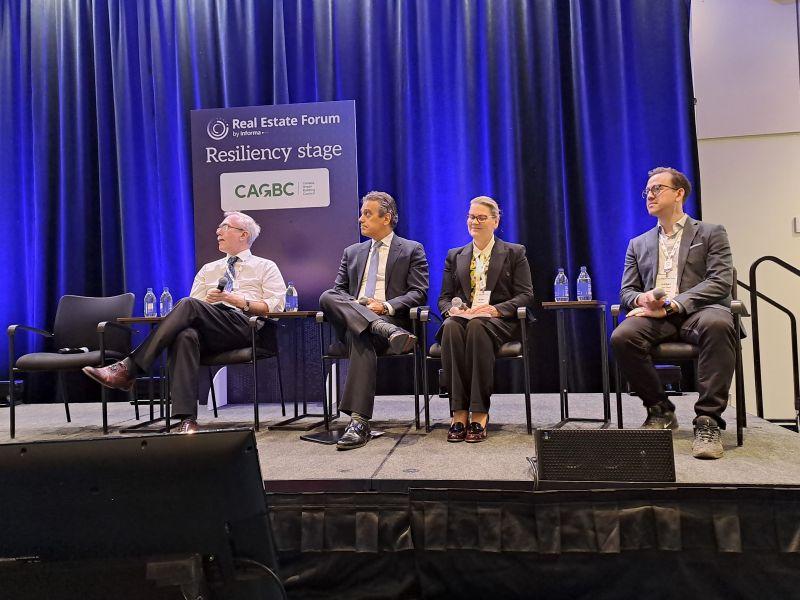
Stanley was part of a panel discussion, entitled Three solutions: Solving for housing, sustainably, during the recent MaRS Climate Impact 2025 conference in Toronto Dec. 2-3.
He listed other countries that are much more advanced, such as Sweden in which “90 per cent of all single-family homes are built by modern off-site manufacturing methods; 45 per cent of all housing in Sweden is built by industrialized construction, 30 per cent in China, 15 per cent in Japan, 10 per cent the U.S., less than five (per cent) for us.”
Horizon's pivot to automated construction
One of the panellists talked about how her family’s more-than-70-year-old real estate development firm recently changed direction.
“About five years ago, Horizon became a construction-automation company,” said Nhung Nguyen, chief executive officer with Toronto-based Horizon Legacy Construction Automation. “We sold all of our real estate and renewable energy assets and jumped in head first into what we’re doing now, and what we’ve become is a vertically integrated, developer technology company."
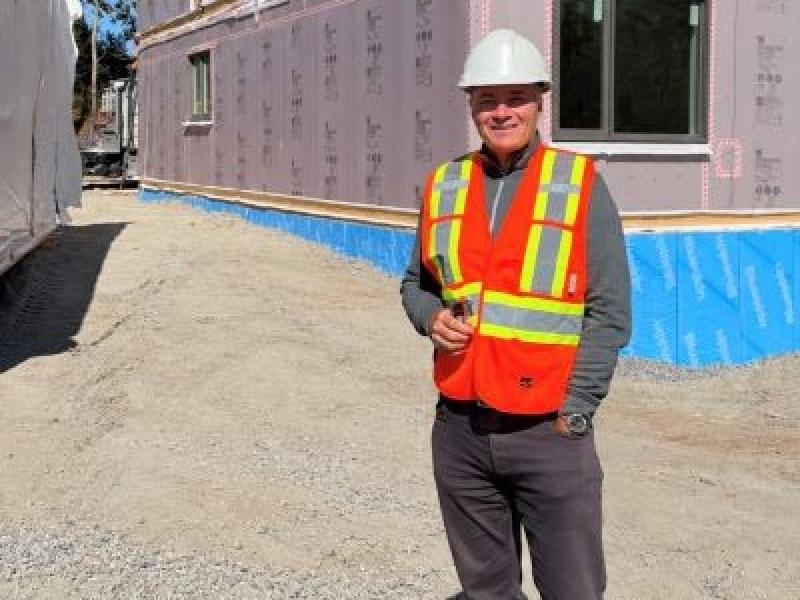
Nguyen highlighted Horizon’s new green housing project in Gananoque, Ont. that is soon to achieve occupancy. “It is an all-electric building. We use about 67 per cent less greenhouse gas than a conventional building, and it’s something that we’re very proud of.”
It includes 26 stacked townhouse units and was built in the company’s micro-factory, according to Nguyen.
But why did the firm decide to work this way? She listed some reasons: lower capital costs, reduced transportation charges, as well as labour challenges.
“There’s a big shortage in labour in construction: about one-in-five workers are about to retire in the next 10 years. This is a problem that we should all be concerned about because if 20 per cent of your workforce is leaving, there’s going to be cost problems because of the labour shortage,” Nguyen said.
Horizon deploys a unique automated method that allows for “design freedom.”
“What we can achieve with this technology is it’s a robot that lays concrete but allows for curved, organic forms that are extremely expensive to build using conventional methods,” she said.
A need for more capital investment
Oliver David Krieg, president of Vancouver’s Intelligent City also talked about his company’s experience with mass timber and how it could be better capitalized.
“We believe that we have a unique opportunity right now to build an all-Canadian supply chain for housing from the forest to the cities. But for the government, to understand that in order for us to increase the supply of housing, we also have to invest in the methods and the factories to supply that demand that is hopefully coming.”
Intelligent City has “developed a product platform, a componentized system made of flat packed, fully-finished components to build a variety of highrise, multifamily projects,” Krieg said, that should also allow for quick builds.
“Those two systems together allow you to erect the structure and enclose the building within weeks, instead of months. We can install a floor every two days, structure and envelope, very rapidly.”
To achieve more scale, the company is building a 100,000-square-foot factory in Ontario, and also scaling up its home base in Vancouver.
The final panellist spoke about his company’s unique way of addressing the housing shortage, with its factory-as-a-service solution.
Promise Robotics is 'building' carpenters
“Promise Robotics has been building the first industrial carpenters in the world. We’ve spent the last several years building what we call our foundational AI reasoning model to take what’s traditionally a highly skilled set of knowledge in the construction sector, and turn it into AI models that can basically translate that into robotic instructions,” said Ramtin Attar, co-founder and chief executive officer of Promise Robotics, which has offices in Toronto, Calgary and Edmonton.
Promise was recently honoured by CMHC as one of four game changers in housing among 252 total entrants.
Attar highlighted the raw speed and computing power of its platform, which he said is 60 per cent faster than traditional construction.
“Just a simple 16-stud centre wall takes two robots to coordinate about 250 to 300 actions, with 16 tools, to perform and produce that for about eight minutes,” he said. “Our vision is any building could be turned into manufactured or component processed through our AI system; send it to a robotic manufacturing facility and take those components to the site and assemble them in days and weeks, and actually, sometimes in hours.”
While the developers showcased their solutions, investment professional Stanley said the time is ripe to take advantage.
“There is a ton of capital in the market waiting for opportunities to be deployed against technologies like this and beyond. We’re not at the early-stage risk anymore. We’re about to scale up.
"These are people who want to adopt this and drive an economic transformation, and I think it’s about providing the right opportunities, and I hope that we can take advantage of that.”


 Industry Events
 Locations