Locations




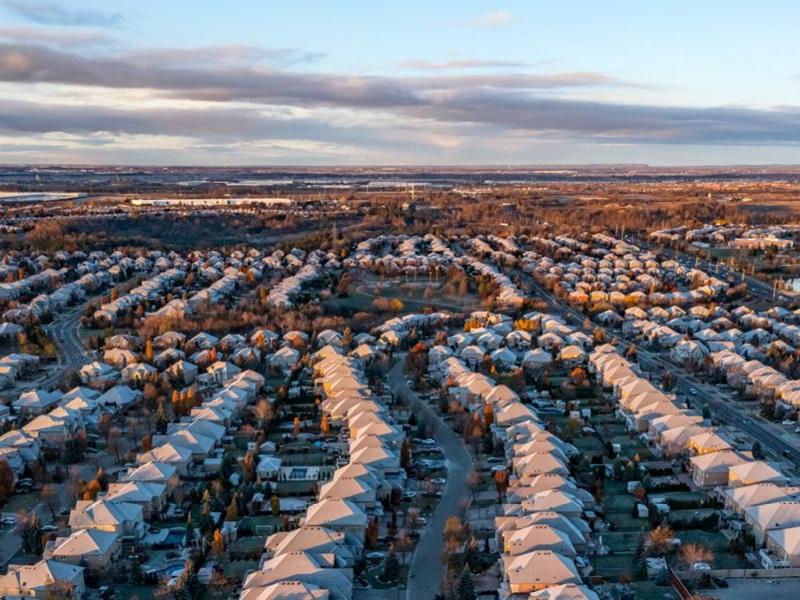
A "true reset” and “upswing” are words real estate industry groups are using to summarize expectations for the Canadian housing market in 2026.
After a rocky 2025 dominated by economic uncertainty, 2026 is generally forecast to be a year of rising sales. REMAX Canada, for example, predicts home sales to increase by 3.4 per cent in 2026 compared to 2025.
The Canadian Real Estate Association (CREA) is even more upbeat: it expects national home sales to increase by 7.7 per cent year-over-year in 2026.
The Canadian housing market could be on the upswing in 2026, REMAX says, with more buyers preparing to enter the market and home sales expected to increase.
“Solid market fundamentals – including lower interest rates, increased supply, and reduced competition – have created a more favourable environment for consumers,” Phil Soper, president and CEO of Royal LePage, said in a December release which calls for 2026 as "a true reset for the Canadian real estate market."
However, the picture is more complicated for housing prices. Royal LePage and CREA see home prices increasing, while REMAX has taken a contrary view.
Regional markets are also on track to take different paths. Activity in Toronto and Vancouver, the largest Canadian housing markets, is expected to remain sluggish. Even the historically strong Calgary and Edmonton markets may see dips in activity.
There are signs Quebec may be the market leader in growth in 2026.
Home price increase expected on the whole
CREA anticipates the national average home sale price to increase year-over-year by 3.2 per cent to $698,622 in 2026.
Similarly, Royal LePage expects the aggregate price of a home in Canada to inch up by one per cent year-over-year to $823,016 in Q4 2026. The median price of a single-family detached property is projected to increase by two per cent to $876,934, while the median price of a condo is forecast to decrease by 2.5 per cent to $563,918.
“Mortgage rates are no longer the villain in this story,” Soper said. Borrowing costs have stabilized enough to support “healthy market activity,” allowing buyers to “move forward without worrying they are missing out on cheaper money tomorrow.”
Taking a contrarian view, however, REMAX sees the average home price in Canada falling by 3.7 per cent year-over-year.
The real estate franchise’s brokers and agents were surveyed for their local market expectations. Just over one third of markets are expected to transition from a buyers’ market to balanced conditions. Approximately 16 per cent of markets are projected to favour sellers, and 10.5 per cent to favour buyers. The remainder are expected to be in varied states.
Regional markets to diverge
Divergences in regional markets were mapped out for 2026.
A common expectation is for average home prices in Toronto and Vancouver to remain on the decline from 2025 into 2026. Royal LePage expects the aggregate home price in the Greater Toronto and Vancouver areas to decrease by 4.5 per cent and 3.5 per cent, respectively. REMAX projects a 3.5 per cent decrease in prices in the Greater Toronto Area (GTA), and a two per cent decrease in Greater Vancouver.
REMAX expects GTA home sales to increase by five per cent from 2025 to 2026, but fall by four per cent in the Greater Vancouver Area over the same period.
Activity in Quebec’s largest housing markets is expected to be vigorous, a movement that would continue activity seen in the fall of 2025. In Quebec City, Royal LePage anticipates aggregate home prices to rise by 12 per cent year-over-year, from $448,200 in Q4 2025 to $501,984 in Q4 2026. In Greater Montreal, the aggregate price is expected to rise from $644,500 to $676,725 over the same period, a five per cent increase.
The Calgary and Edmonton markets are expected to slow this year after a phase of solid growth. Royal LePage forecasts the aggregate price to rise by 1.5 per cent in Calgary – from $690,700 in Q4 2025 to $701,061 in Q4 2026. In Edmonton, it projects the aggregate price to tick up by two per cent in the same period, going from $471,500 to $480,930.
An Altus Group analysis also suggests the Calgary and Edmonton markets are showing early signs of softer resale demand and weaker new home sales.
Interest rates, government policies
After the Bank of Canada made cuts to the overnight interest rate in 2025, there is skepticism that further tapering will take place in 2026.
RBC forecasts the overnight interest rate will stay at 2.75 per cent throughout 2026. Royal LePage says further cuts will likely only be made if the Canadian economy shows major signs of weakness.
Vancouver-based Realtor Steve Saretsky, the author of The Saretsky Report on Substack, agrees.
"Betting markets suggest the Bank of Canada is unlikely to come to the rescue," he wrote in this week's post emailed to subscribers. "There are currently zero rate cuts expected for all of 2026. In fact, markets are currently pricing in one hike by the end of the year. This is subject to change, but barring a significant deterioration in the economic data, the BoC will be on the sidelines."
Federal initiatives to build more affordable housing are an area to watch this year, Soper said in the Royal LePage forecast, pointing specifically to the new Build Canada Homes agency.
“2026 will be a transition year for Canada’s housing market, as improved affordability and less competitive conditions continue to favour buyers,” Soper said.
“We expect activity to build slowly over the next several months, and if the spring market coincides with steadier economic and trade conditions, buyer confidence could strengthen in tandem.”





 Industry Events
 Locations