Locations





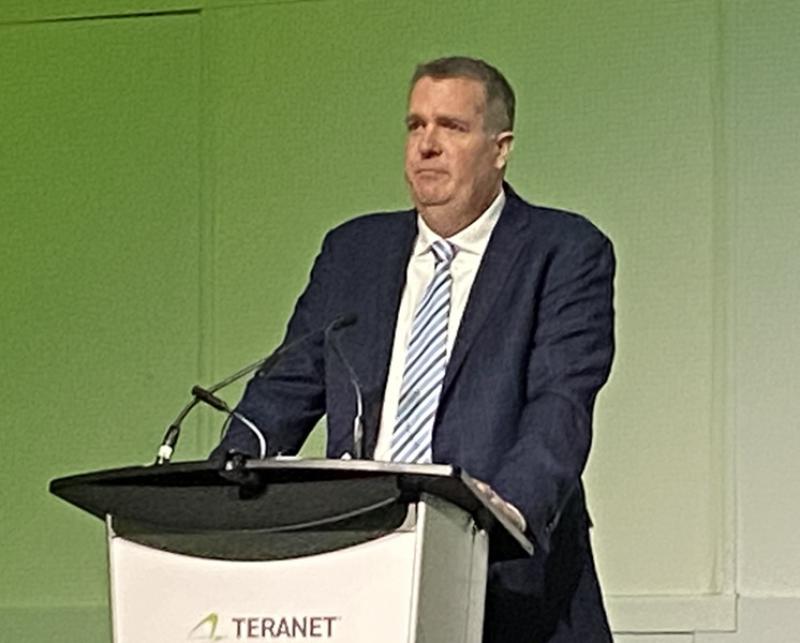
Ontario’s housing market has undergone some significant changes in recent years. The April 21 Teranet Property Ecosystem Summit at Toronto’s Design Exchange brought industry representatives together to update these conditions and today's economy.
The most detailed presentation came from Teranet vice-president of finance and corporate controller Trevor Appleton, who did a deep dive on trends in Ontario’s condominium and non-condo sectors.
“It's a market that's hard to read and the shifts we're seeing are subtle yet pervasive,” Appleton explained. “Multi-purchase buyers, investors so to speak, are still transacting. But, what we're seeing is a decline in portfolio sizes, less institutional activity and more individuals with the financial capacity to buy as prices decline.
"First-time home buyers continue to interact, but the profile of those buyers is different.”
Condos vs. non-condos
Teranet has expertise in land and commercial registries. It provides statutory registry services along with property intelligence and data solutions to thousands of customers in the real estate, financial services, government, utilities and legal sectors. Its data covers when houses are completed and transferred to a new owner, not when they’re sold.
Condos accounted for between 22.6 and 27.6 per cent of Ontario transfers each year between 2015 and 2025. In Toronto, condos accounted for between 60.5 and 65.6 per cent of transfers during those years.
“Transfer volumes dropped, not unexpectedly, from the highs of 2021 in the COVID sales boom,” Appleton said of Toronto's condo market. “Prices have continued to decline and interest rates have come down, yet the market is stagnant.”
New-build condo transfers in Toronto dropped by 11.9 per cent in 2025 while resale condo transfers fell by 2.4 per cent.
“A lot of those investors, or what we call multi-property owners, are finding that the equation to make money on a condo unit is not the same as it was when they were buying in droves in ’21 and ’22,” Appleton said.
While power of sale transactions in Ontario have been rising and were over five times higher in 2025 than the 10-year low recorded in 2022, Appleton said they’re still not at meaningful volumes as banks work with clients to try and avoid that outcome. Condos have accounted for a large portion of power of sale transactions.
Ontario homebuyers
Teranet classifies Ontario homebuyers in five categories:
- movers from one Ontario property to another;
- multi-property owners whose purchases could include a principal residence, investment property or recreational property;
- first-time homebuyers;
- those dealing with life events, such as marriage, divorce or a transfer between generations; and
- others, which can include buyers from outside Ontario or Canada, or those re-entering the property market after an extended absence.
First-time homebuyers accounted for 24.8 per cent of transfers last year, up from 21.9 per cent in 2021. Life event buyers increased to 22.8 per cent from 17.5 per cent. Multi-property owners were down to 21.5 per cent from 23.8 per cent. Others slid to 17.9 per cent from 19 per cent. Movers fell to 13 per cent from 17.9 per cent.
Multi-property owners at 33.3 per cent and first-time homebuyers at 26.9 per cent represented the largest portions of the condo transfers, while life event buyers (26.7 per cent) and first-time homebuyers (24 per cent) were the most active for non-condos.
Purchasers are getting into the market at a later age – potentially another indicator of affordability challenges.
Despite continued purchasing by multi-property owners, their portfolio sizes have shrunk since 2022. While 7.5 per cent owned 10-or-more housing units, 55.2 per cent owned two, and 19.8 per cent owned three.
Appleton said there’s been a trend to multi-title ownership, with people pooling their money and using generational wealth to afford properties.
Ontario movers and sellers
The percentage of people moving within the same region of Ontario had generally been declining from 2011 to 2023 but started rising again over the past two years. Part of this recent trend can be explained by a lower percentage of people moving out of the Greater Toronto Area (GTA) since 2021, when there was a small exodus due to the COVID-19 pandemic and an increase in remote working.
However, the percentage of people moving into the GTA hit a 15-year low in 2025. Much of this can be attributed to continuing affordability issues, even though housing prices have come down.
The average holding period increased from 6.7 years in 2016 to 8.6 years in 2025 for condos and from 11.3 to 13 years for non-condos. The holding period for non-condos in Toronto rose from 14.2 to 17.7 years, much higher than in neighbouring York Region where the increase went from 8.6 to 10.9 years.
Properties acquired since 2021 are far more likely to sell at a loss than those purchased earlier. Elevated rates of loss were observed for properties purchased in 2022 across all value ranges.
Conclusions
“I think that multi-property owners will maintain a valuable presence, probably with smaller portfolios, less leverage and a real focus on quality,” Appleton said in his concluding remarks.
“First-time homebuyers will continue to be challenged, I think, but will still enter the market — albeit probably older and with a little bit of help from friends or parents.”
Appleton believes the fundamentals of the Ontario residential real estate market are strong. He thinks 2026 will be transitionary and that things will start opening up again next year.


 Industry Events
 Locations