Locations







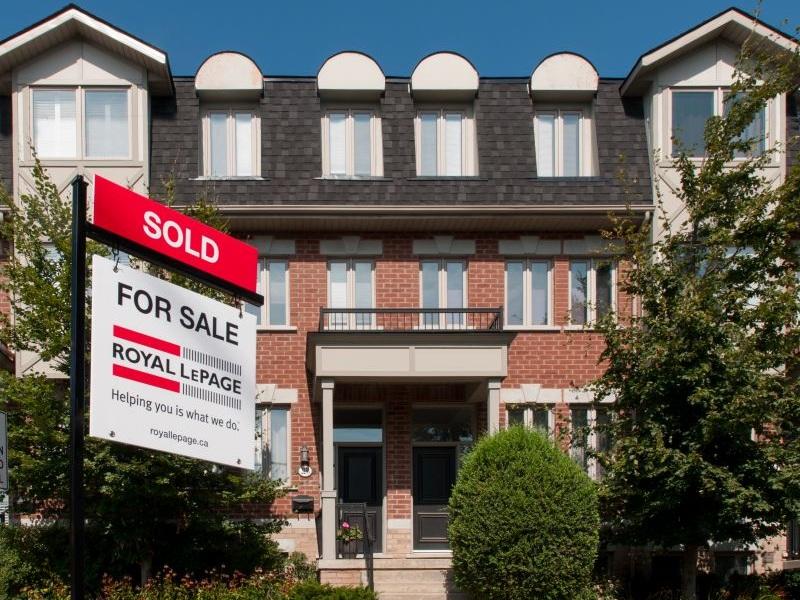
While April showers are sprinkling parts of Canada, the country’s housing markets have yet to blossom, Royal LePage and the Canadian Real Estate Association (CREA) said, with political and economic instability keeping Canadians away.
The two organizations both report slow starts to spring housing markets, despite the season being one of the busiest on average.
CREA and Royal LePage blamed the effects of the Iran war, which led to higher oil prices and raised the odds of a rate hike by the Bank of Canada and thus higher mortgage rates. CREA also said the Canadian economy’s growth has been marginal.
As a result, CREA downgraded its resale housing market forecast for 2026 and 2027. For 2026, the Ottawa-based organization had expected a 5.1 per cent increase in sales from 2025; now it anticipates a one per cent increase. For 2027, the sales forecast from 2026 was also reduced – from a 3.5 per cent increase to 2.1 per cent.
Royal LePage found the aggregate home price decreased by two per cent year-over-year to $812,900 in Q1 2026. On a quarter-over-quarter basis, the same metric increased by 0.7 per cent. CREA’s non-seasonally adjusted national average home price was $673,084 in March, falling 0.8 per cent year-over-year.
"In a typical spring, Canada's housing market would already be gaining momentum, but persistently low consumer confidence remains a drag on activity – especially in our most expensive markets," Phil Soper, president and CEO of Royal LePage, said in a release. Soper also noted the ongoing CUSMA trade negotiations which are raising questions about job security and the economy for many Canadians.
Where are home prices headed?
The latest forecasts come after industry expectations for higher activity, particularly from first-time buyers, who were anticipated to be on the hunt for homes after years of pent-up demand and better conditions such as falling prices and more incentives.
March data does not show prospective homebuyers are racing to buy homes yet. CREA said the number of home sales recorded over Canadian MLS Systems decreased by 0.1 per cent on a month-over-month basis. The MLS Home Price Index fell 0.4 per cent month-over-month and was down 4.7 per cent on a year-over-year basis.
Similarly, Royal LePage reports home prices decreased on an annual basis. Its data shows the national median price of a single-family detached home decreased by 1.3 per cent year-over-year to $857,300 in Q1 2026, and the median condo price fell 3.4 per cent to $577,600.
Soper maintained an upbeat note for homebuyers, saying the “underlying fundamentals of Canada's housing market remain sound,” such as a stable interest rate and prices declining in Toronto and Vancouver.
On the other hand Michael Davenport, a senior economist at Oxford Economics, disagreed, citing the CREA resale housing data: "Canada's resale housing market is stuck in a rut, and it doesn't look likely to break out of it anytime soon."
In an emailed statement to RENX Homes, Davenport said he expects Canadian home prices to fall before bottoming out around mid-year due to modest job growth, improved affordability and fiscal stimulus. But such a scenario will depend on conflict in the Middle East ending soon and a favourable renegotiation of CUSMA.
"There's a material risk that Canada's housing slump could persist for longer and lead to a deeper correction in prices," he said.




 Industry Events
 Locations